
Table of Contents
ToggleIntroduction:
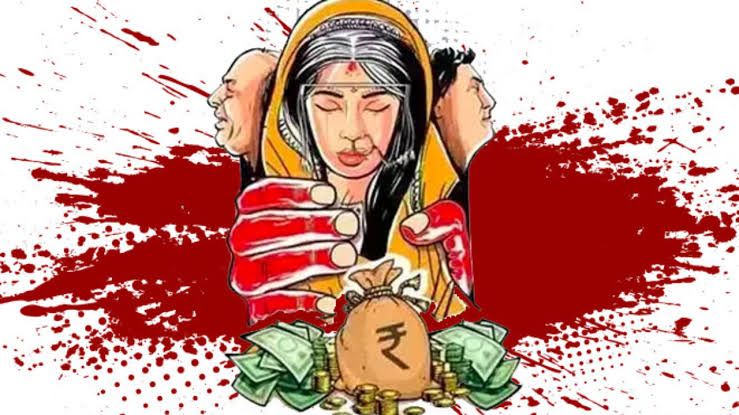
India has enacted some of the strongest anti-dowry laws in the world, But still dowry-related deaths continue to rise with disturbing our society. Every year, newspapers report horrifying incidents of newly married women being tortured, driven to suicide, or murdered for dowry demands and domestic violence also. Despite legal safeguards such as the Dowry Prohibition Act, 1961, Section 80 of the Bharatiya Nyaya Sanhita (earlier Section 304B IPC), and Section 85 BNS (earlier Section 498A IPC), the social evil of dowry remains deeply embedded in Indian society.
The persistence of dowry deaths raises a critical legal and social question: Why are strict laws failing to prevent these crimes?
The Continuing Reality of Dowry Deaths:
Dowry was originally intended as voluntary gifts given to a bride during marriage. Over time, however, it transformed into a coercive financial transaction where the bride’s family is pressured to provide cash, vehicles, gold, property, and expensive gifts. When these demands are not fulfilled, women often become victims of cruelty, harassment, and violence within their matrimonial homes.
Recent incidents demonstrate that dowry violence is far from declining. In Year 2026, the alleged dowry death of Deepika Nagar in Greater Noida and Twisha death case shocked the nation after the autopsy revealed severe internal injuries and allegations of repeated demands for cash, gold, and a luxury SUV car or Fortuner car. Another disturbing case from Nagpur involved a 19-year-old newlywed woman allegedly tortured and killed for dowry by her in-laws.
Such cases expose the brutal reality that legal prohibitions alone are insufficient to eliminate entrenched patriarchal practices.
Legal Framework Against Dowry Deaths India’s anti-dowry legal framework is extensive. The primary legislation is the Dowry Prohibition Act, 1961, which criminalizes giving, taking, or demanding dowry.
Under the newly enacted Bharatiya Nyaya Sanhita, 2023:
- Section 80 defines “dowry death” and provides punishment of at least seven years imprisonment, extending to life imprisonment.
- Section 85 penalizes cruelty by the husband or relatives of the husband.
- The Bharatiya Sakshya Adhiniyam, 2023 under Section 118 creates a legal presumption against the accused where a woman dies unnaturally within seven years of marriage following dowry-related harassment.
Indian courts have repeatedly emphasized the seriousness of such offences. In year 2026, the Supreme Court of India observed that “young girls don’t get married to be killed for dowry” while cancelling bail granted in a dowry death case. The Court further stressed that judicial leniency in such matters undermines public confidence in justice.
Why Dowry Deaths Continue Despite Strict Laws1. Deep-Rooted Patriarchal MindsetThe primary reason behind the persistence of dowry deaths is the deeply patriarchal structure of Indian society. In many communities, marriage is still viewed as a financial arrangement where the groom’s family expects economic gain. Women are often treated as liabilities, while sons are considered assets capable of generating wealth through marriage.
Even educated and financially stable families participate in dowry transactions under social pressure and the desire for status.
2. Social Acceptance of DowryOne of the greatest challenges is that dowry continues to enjoy social legitimacy. Many families disguise dowry as “gifts” or “customary exchanges.” Because the practice is normalized, victims often hesitate to report harassment at an early stage.
Parents frequently encourage daughters to “adjust” in abusive marriages to avoid social stigma. In the Deepika Nagar case, reports indicated that despite repeated harassment, the victim’s family advised her to continue adjusting in the marriage.
3. Weak Investigation and Delayed JusticeAlthough laws are stringent, enforcement remains inconsistent. Police investigations in dowry death cases are often flawed, delayed, or influenced by local pressures. Poor evidence collection weakens prosecutions and leads to acquittals.
In a recent Uttar Pradesh case, a court acquitted an accused family and even ordered action against police officers for conducting a defective investigation. Such failures reduce public trust in the criminal justice system.
Additionally, prolonged trials discourage victims’ families from pursuing justice. Cases frequently remain pending for years, allowing accused persons to secure bail or manipulate evidence.
4. Misuse Debate Weakening Genuine CasesThe debate surrounding misuse of anti-dowry laws has also complicated enforcement. Courts have acknowledged that provisions like Section 498A IPC (now Section 85 BNS) are sometimes misused through false or exaggerated complaints.
While misuse must be addressed, excessive focus on false cases can dilute protection for genuine victims. This creates hesitation among police authorities and courts, sometimes leading to lenient treatment of serious offenders.
5. Economic Dependency of WomenMany women remain financially dependent on their husbands and in-laws, making it difficult to leave abusive marriages. Fear of social isolation, economic insecurity, and family dishonor often compels victims to tolerate violence until it escalates into fatal abuse.
Judicial Response and Need for Reform
The judiciary has recently shown a stronger stance against dowry crimes. The Supreme Court has criticized “judicial passivity” and emphasized that dowry deaths are crimes against society itself. Courts have also insisted that statutory presumptions in dowry death cases must be applied strictly.
However, legal reform alone cannot eradicate dowry deaths. India requires:
- Faster investigation and trial mechanisms
- Greater police accountability
- Economic empowerment of women
- Public awareness campaigns against dowry culture
- Mandatory counseling and community intervention in harassment complaints
- Stronger social condemnation of dowry practices
Conclusion
Dowry death is not merely a criminal offence; it is a reflection of systemic gender inequality and social hypocrisy. India possesses strict laws, but laws alone cannot defeat a practice that society continues to tolerate. The real solution lies in changing social attitudes, strengthening institutions, and ensuring that every woman is treated with dignity rather than as a source of financial gain.
Until dowry itself becomes socially unacceptable, dowry deaths will continue to expose the painful gap between legal protection and ground reality in India.
👍 good